


Disadvantages Of Waterless Car Wash: A Complete Guide to Protecting Your Paint
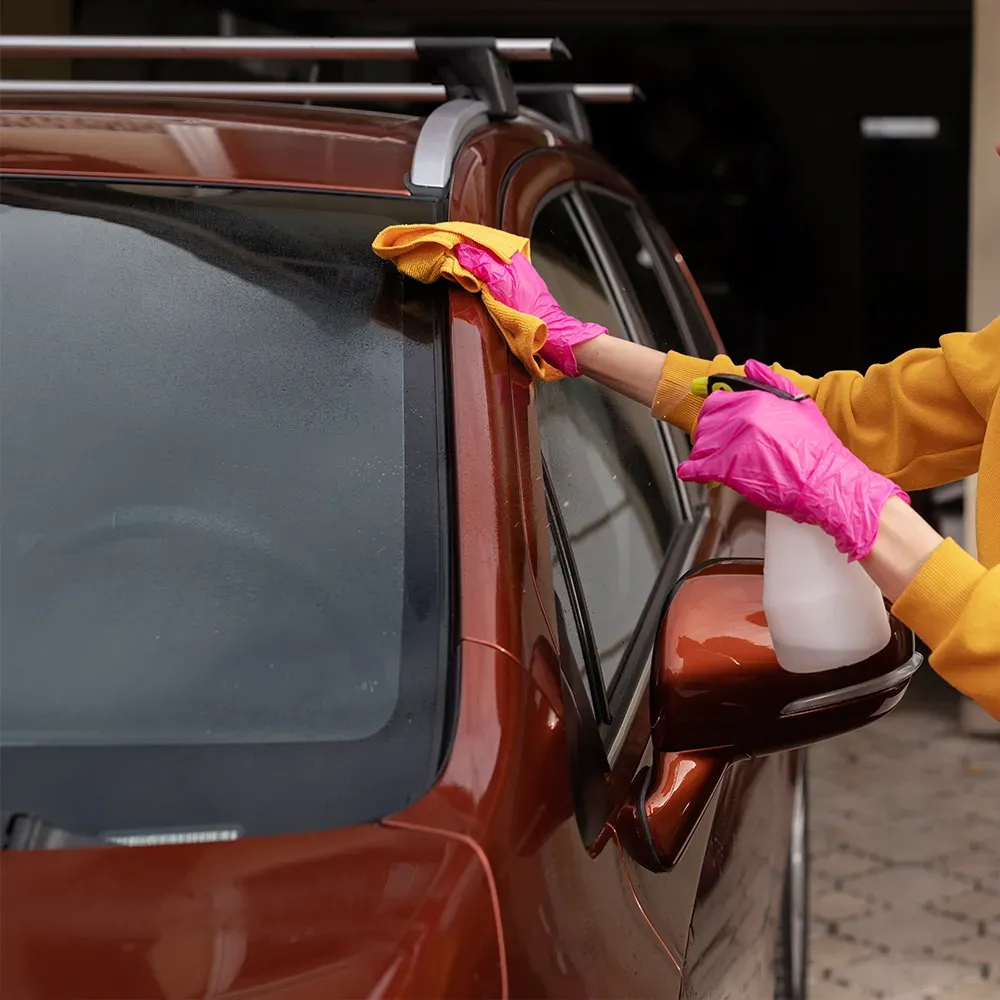
The promise of a “waterless car wash” sounds like magic to any vehicle owner. Imagine cleaning your entire car in a parking garage or a driveway during a drought, using nothing but a spray bottle and a few towels. It is the ultimate convenience in our busy lives, often marketed as the “Drought-Safe” hero of modern detailing.
However, as someone who has spent over a decade obsessed with paint correction and surface preservation, I’ve seen the “too good to be true” side of this trend. While these products use impressive Nano-Technology to lift dirt, they aren’t a universal replacement for a traditional wash. In fact, if used incorrectly, they can cause more harm to your clear coat than a year’s worth of rain. This guide breaks down the genuine risks and hidden costs you need to consider before ditching your hose and bucket.
5 Major Disadvantages of Waterless Car Washing in 2026
1. The Physics of Friction: Why Scratches are Nearly Inevitable
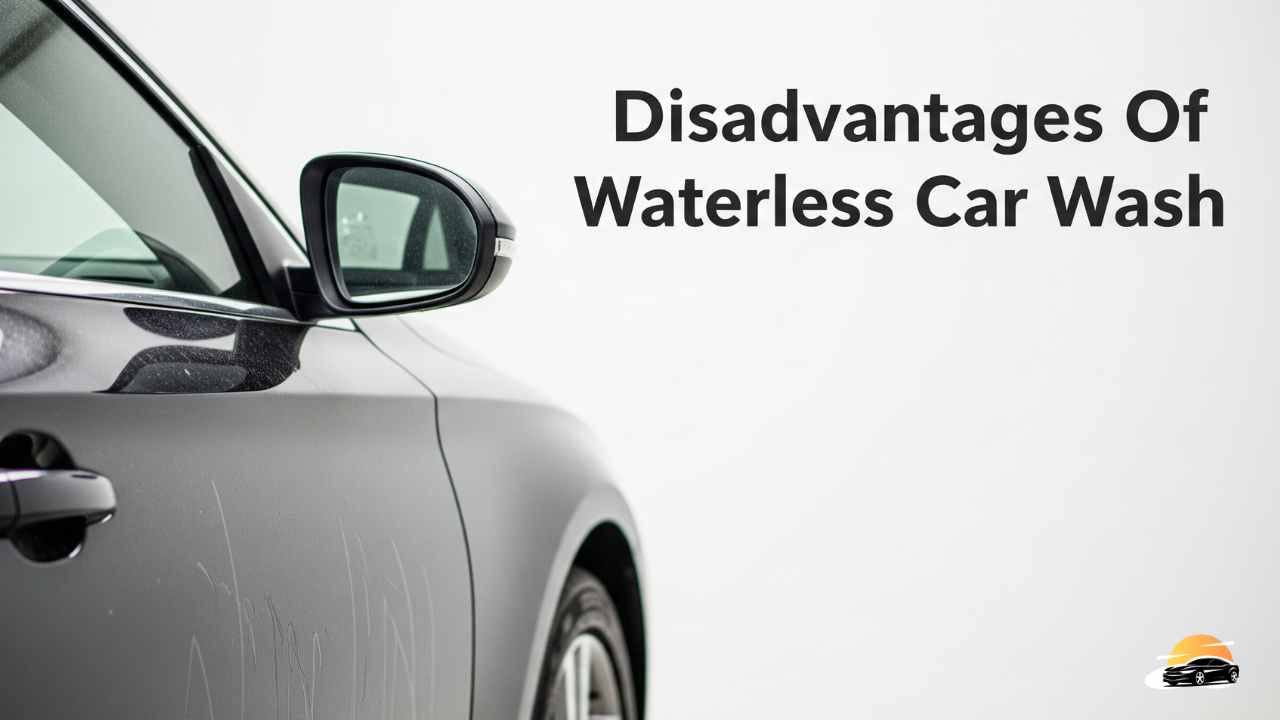
The biggest hurdle for any waterless product is the simple physics of friction. In a traditional wash, flowing water acts as a carrier to flush Abrasive Contaminants off the surface. Without that flow, you are relying entirely on Polymer Encapsulation. This technology works by surrounding dirt particles in a lubricated film, theoretically allowing them to slide off.
In my own testing on a Jet Black test panel, a color notorious for showing every flaw—I observed that even with High Lubricity sprays, microscopic Paint Marring occurred after just five consecutive waterless washes. The “Sandpaper Effect” is real; when you press a microfiber towel against a panel covered in Heavy Road Grime, you are essentially grinding those particles into the Clear Coat. No matter how much “lift and wipe” technique you use, the lack of a flushing mechanism remains a significant risk for Swirl Marks.
2. Chemical Stripping: Is Your Wax Being Destroyed?
Many users don’t realize that the surfactants required to make a waterless wash effective can be quite aggressive. While most are advertised as a pH-Neutral Formula, the high concentration of cleaning agents can lead to Chemical Stripping. If you’ve spent hours applying a premium Carnauba Wax or a Synthetic Sealant, a waterless wash might degrade that protective layer faster than expected.
Furthermore, there is the issue of Ceramic Coating Compatibility. Some waterless products contain “gloss enhancers” or cheap silicones that can clog the pores of a high-end coating, temporarily killing its Hydrophobic Properties. You might think you’re cleaning your car, but you’re actually layering a film over your expensive Graphene Protective Layer, altering its performance and shine.
3. The “Heavy Mud” Limitation
There is a hard boundary where “waterless” becomes “dangerous.” If your car has visible mud, salt crust from winter driving, or thick layers of grit, a waterless wash is a recipe for disaster. These products are designed for “light dust” or “fingerprint removal,” not for a vehicle that has just come back from a rainy commute or an off-road trail.
The risk of Clear Coat Etching increases exponentially when you try to wipe away heavy debris. The abrasive particles become trapped between the towel and the paint, creating deep scratches that require professional Paint Correction to fix. My rule of thumb is simple: if you can’t see the paint color through the dirt, stay away from the spray bottle.
4. Residue and Streaking: The Microfiber Saturation Point
One of the most frustrating aspects of waterless washing is the Saturation Point. To do this safely, you need an incredible amount of Microfiber Towels. Most beginners try to clean a whole car with two or three towels, but in reality, you should be using the “One Panel, One Side” rule. Once a towel side has touched the paint, it is contaminated and should not be used again on a clean area to avoid Cross-Contamination.
Furthermore, Flash-Drying is a major issue. If the Surface Heat is too high—such as when working in direct sunlight—the product dries before you can buff it off. This leaves behind Buffing Residue, streaks, and Water Spots from the minerals in the formula, making the car look worse than when you started.
5. Cost-Efficiency Paradox
While you save money on your water bill, the “per wash” cost of high-quality waterless concentrates is significantly higher. A gallon of professional-grade pH-neutral soap might cost $40 and last for 50+ washes. Conversely, a high-end waterless gallon, when used at the proper dilution for safety, often costs three to four times more per application. When you factor in the cost of buying and laundering 15–20 high-GSM microfibers per wash, the “convenience” starts to look very expensive.
Why People Like Waterless Car Washes
It’s not hard to see the appeal. On paper, waterless car washes check a lot of boxes that sound good—especially if you care about time, convenience, and yes, even the planet.
Less Water, Less Guilt
Traditional car washes can use dozens of gallons per wash. A spray-and-wipe product uses a fraction of that. In places where droughts are common, this sounds almost heroic.
Clean Anywhere
No hose. No driveway. No scrambling for a “designated wash area.” You can do it in a parking lot at work or even inside your garage without making a mess.
Quick Touch-Ups
If your car just has some light dust or pollen, a spray bottle and a microfiber towel feel faster than breaking out the bucket and hose. Spray, wipe, done, at least in theory.
All Of This Makes Sense
Makes sense. But here’s the thing, like most products with green and easy stamped on the label, waterless washes aren’t exactly a silver bullet.
The Fine Print Nobody Really Brags About
1. Decent for Dust, Weak Against Real Grime
If your car just needs a light polish, it works. But mud, dried bird droppings, or that sticky stuff trees leave behind? Not so much. You’ll either smudge it around… or grind grit into your clear coat.
2. Scratches Waiting to Happen
Micro-scratches and swirl marks are the hidden tax here. Even if you swap to clean towels as recommended, one grain of sand can drag across your paint like—well, like sandpaper. Over time, this adds up.
3. The Cost Question
Sure, one bottle doesn’t look pricey. But factor in how much spray you’ll use (and the endless pile of microfiber towels you’ll need to keep swapping out), and the math gets fuzzy. In some cases, an old-school coin-op wash might actually be cheaper.
4. Not Great for Every Job
Undercarriage? Tires? Caked-on mud? Forget it. A waterless wash is for surfaces you can see and reach, not the nastier gunk underneath or inside the rims.
5. More Work Than Advertised
Marketing says “fast.” Reality says: spray, wipe, swap cloth, repeat—a hundred times if you drive a truck or SUV. Skip steps, and you risk streaks and spots.
6. Dirt You Don’t See Still Counts
Even if the car looks shiny, microscopic grit can linger. That invisible layer acts like fine sandpaper each time you touch or wipe the surface. Long-term, it dulls your finish.
7. Spotty Results
Missed patches, streaks, dried spray lines—especially if you’re working in the sun. This happens more than brands admit, especially for beginners.
8. Clean ≠ Protected
Most products only remove dust. They don’t actually shield your paint like wax does. So you get the look of clean… without the extra layer of protection against UV, rain, or road grime.
Waterless vs. Rinseless vs. Traditional: A Technical Comparison
To understand the Lubricity Gap, we have to look at how these methods handle dirt.
Expert Mitigation: How to Use Waterless Safely (If You Must)
If you live in an apartment or a region with strict Water Restrictions, you might have no choice. Here is how to minimize the damage:
The “Pre-Rinse” Hybrid Method: If the car is moderately dirty, go to a self-service bay and use the pressure washer (water only) to blast off the Heavy Road Grime first. Then, perform your waterless wash at home.
High-Pile Microfiber (GSM): Never use cheap, thin towels. You need a Pile Height of at least 400–600 GSM. The longer fibers pull the dirt away from the paint and “bury” it deep in the towel, reducing the chance of it scratching the surface.
The Single Direction Wiping Technique: Never rub in a Circular Motion. Use a “Lift and Wipe” technique in straight lines. If you hit a piece of grit, a straight-line scratch is much easier to polish out than a circular swirl mark.
Environmental Impact: Saving Water vs. Chemical Waste
While marketed as “green,” the environmental footprint of waterless washing is complex. Yes, you save water, which is vital in Drought-Friendly areas. However, you must consider:
VOCs: Some formulas contain Volatile Organic Compounds that are released into the air as you spray.
Microfiber Waste: Microfibers are synthetic (plastic) and shed microplastics during every wash cycle.
Runoff: While there is no Environmental Runoff into storm drains, the chemical-soaked towels eventually require heavy detergents to clean.
Final Verdict: Is Waterless Right for Your Vehicle?
It is Best For:
-
Urban dwellers with no access to a hose.
-
Removing light dust or fingerprints at a car show (Detail Spray style).
-
Cleaning a vehicle that is already 95% clean.
Avoid it If:
-
You live in a “salt-belt” region where winter grime is acidic and abrasive.
-
You own a car with “Soft Paint” (often found on certain Japanese imports) that scratches easily (low on the Mohs Scale).
-
Your vehicle is a daily driver that hasn’t been washed in over a week.
Waterless washing is a tool, not a miracle. It requires a high level of User Error awareness and a massive inventory of clean towels to be done safely. For most enthusiasts, a Rinseless Wash (like Optimum No Rinse) offers a much safer middle ground with nearly the same level of convenience.
Would you like me to create a specific list of the best 500+ GSM microfiber towels and waterless concentrates currently recommended by professional detailers?


