




The decision to tint your vehicle extends beyond simple aesthetics; it is a functional investment in thermal management, UV protection, and interior preservation. However, when navigating the market, the price disparity can be jarring. Drivers often find quotes ranging from as low as $100 to upwards of $1,000 for the same vehicle. Understanding the mechanics behind this pricing structure is essential for maximizing value.
The cost to tint car windows depends primarily on three semantic variables: the technological composition of the film (Dyed vs. Ceramic), the surface area and curvature of the glass (Labor Difficulty), and the warranty tier provided by the installer. This guide deconstructs these cost centers to provide a precise financial roadmap for your aftermarket upgrade.
National Average Costs: What to Expect
Before analyzing the technical specifications, we must establish a baseline. Market data from professional installers across the United States indicates a tiered pricing structure based on quality.
- Standard Truck/Sedan (Full Tint): $150 – $650
- SUV/Minivan (Full Tint): $250 – $850
- Two Front Windows Only: $70 – $180
- Windshield Strip (Visor): $30 – $80
These ranges represent the spectrum from entry-level films to high-performance nano-ceramic solutions. To determine where your quote should land, you must understand the material science governing the film industry.
Cost Variable 1: Film Technology and Performance
The most significant factor influencing the price tag is the film material. Not all tint is created equal; a $150 dye job functions differently than a $600 ceramic application. Here is the semantic breakdown of pricing by film category.
1. Dyed Window Film (Budget Tier)
Estimated Cost: $100 – $250
Dyed film relies on a layer of dye sandwiched between the adhesive and the protective top coat to absorb sunlight. While it effectively darkens the windows for privacy, it offers minimal heat rejection. This material is the most affordable option but suffers from low durability. Over time, UV exposure causes the dye to oxidize, turning the tint purple and leading to bubbling.
Expert Verdict: Choose dyed film if your primary goal is aesthetics or privacy on a limited budget, but do not expect significant temperature control or longevity.
2. Metalized Window Film (Mid-Tier)
Estimated Cost: $200 – $400
Metalized films incorporate micro-particles of metal into the polyester layers. This technology reflects light and heat away from the cabin, offering superior thermal performance compared to dyed alternatives. The distinct drawback is signal interference; the metal content can disrupt GPS, cellular, and radio reception. Additionally, these films often have a shiny, reflective appearance that some drivers find undesirable.
3. Carbon Window Film (Performance Tier)
Estimated Cost: $250 – $500
Carbon film infuses carbon particles into the film structure. This material provides a dense, matte-black finish that appeals to automotive enthusiasts. Functionally, carbon film blocks approximately 40% of infrared heat and does not fade over time. It strikes an excellent balance between cost, durability, and performance, making it a popular choice for mid-range budgets.
4. Nano-Ceramic Film (Premium Tier)
Estimated Cost: $450 – $1,000+
Nano-ceramic tint represents the pinnacle of window film technology. These films utilize non-conductive ceramic particles that are small enough to be invisible to the naked eye but powerful enough to block up to 99% of UV rays and significantly reduce infrared heat. Ceramic tint maintains high visibility (VLT) while rejecting heat, allowing for lighter shades that perform better than pitch-black dyed tints. The high entry cost is offset by lifetime warranties and superior interior protection.
| Film Technology | Price Range (Sedan) | Heat Rejection | Signal Interference | Durability |
|---|---|---|---|---|
| Dyed | $100 – $250 | Low | None | Low (Fades) |
| Metalized | $200 – $400 | Medium | High | High |
| Carbon | $300 – $500 | High | None | Very High |
| Ceramic | $500 – $900+ | Superior | None | Lifetime |
Cost Variable 2: Vehicle Class and Labor Complexity
Installers calculate labor costs based on the total surface area of the glass and the difficulty of the installation. A flat piece of glass is easy to tint; a curved rear windshield requires heat shrinking, a technique where the installer uses a heat gun to mold the film to the glass curvature before application.
Coupes and Sedans
Standard passenger vehicles typically have five to seven windows. However, the rear windshields of sedans often have steep angles and integrated defrost lines, which require meticulous cleaning and preparation. Labor rates for these vehicles are the industry standard baseline.
SUVs and Trucks
While trucks may seem larger, they often have fewer windows to tint if the rear factory glass is already darkened (privacy glass). However, owners often tint over factory privacy glass to add UV protection, as factory “tint” is usually just dyed glass with no heat rejection properties. Full SUVs have large surface areas, increasing material costs.
The “Tesla Tax” and Specialty Vehicles
Certain vehicles, particularly the Tesla Model 3 with its massive panoramic rear window, command a premium. Tinting a Model 3 rear window requires a single, massive sheet of film (60 inches long) and advanced heat-shrinking skills. Many shops charge an additional $150 to $300 for such vehicles due to the high risk of film waste and the extended labor time required.
Cost Variable 3: Warranty and Brand Authority
When you purchase professional window tinting, you are also purchasing an insurance policy on the work. High-quality films from reputable brands like 3M, XPEL, Llumar, and SunTek come with manufacturer-backed warranties.
- Standard Warranty: Covers peeling and bubbling for 1–3 years. Common with budget shops.
- Lifetime Warranty: Covers fading, color change (purpling), peeling, and bubbling for as long as you own the car. This is standard for Carbon and Ceramic packages.
- Transferable Warranty: Some premium brands allow the warranty to transfer to a new owner, increasing the vehicle’s resale value.
Paying an extra $100 for a reputable shop ensures that if the film fails, the replacement labor and materials are covered. “Mobile tinting” services offering rock-bottom prices often lack the facility or longevity to honor these warranties.
Hidden Costs: Removal and Legal Compliance
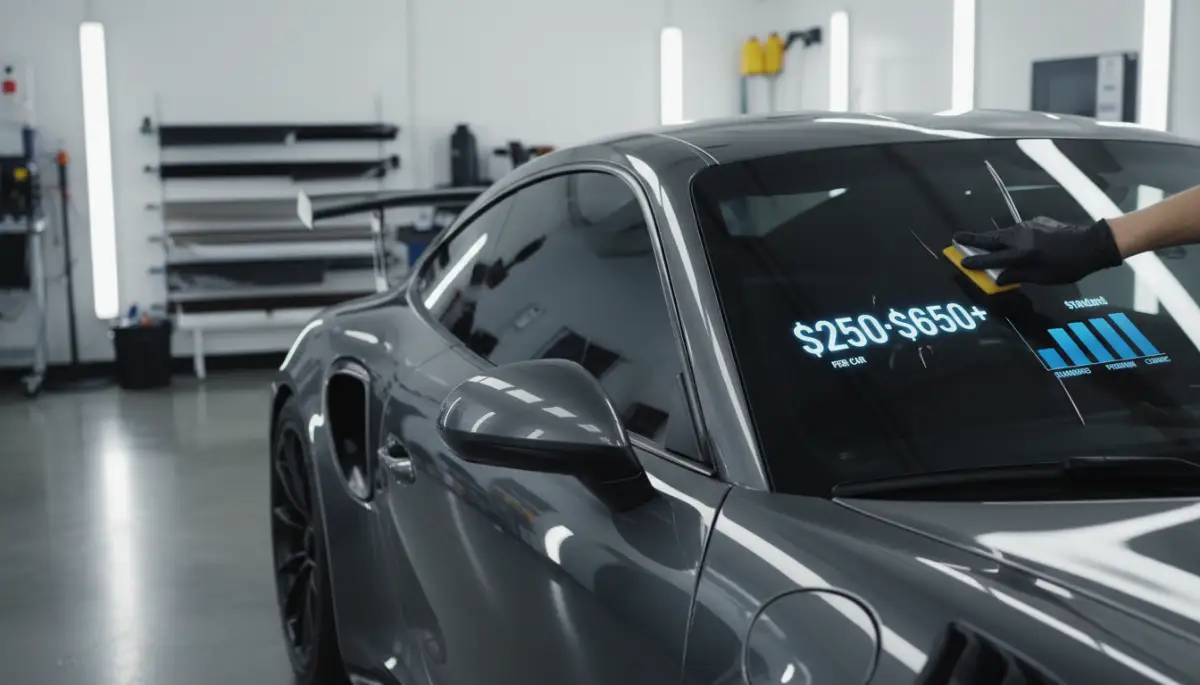
Your budgeting must account for potential hidden expenses that fall outside the standard installation quote.
Old Tint Removal
If your vehicle already has aftermarket tint that needs replacing, expect to pay a removal fee. Removing old tint is a tedious process involving steam and chemical solvents to dissolve the hardened adhesive.
Average Cost: $100 – $200 extra.
Legal Compliance Violations
Every US state enforces specific laws regarding Visible Light Transmission (VLT). For example, California and New York have strict limits on front window darkness. Installing “limo tint” (5% VLT) on front windows is illegal in most jurisdictions. The cost of a non-compliance ticket can range from $100 to $300, plus the cost of having the tint removed to clear the citation. Always verify your local laws before selecting a darkness level.
DIY vs. Professional Installation: Is the Savings Real?
Automotive retailers sell DIY tint kits for $30 to $100. While the upfront savings appear attractive, the failure rate for amateur installation is exceptionally high. Professional tinting requires a dust-free environment, precise micro-edge cutting, and skill in heat shrinking.
A DIY attempt often results in:
- Contamination: Dust and hair trapped between the film and glass.
- Fingers/Creases: Permanent wrinkles where the film did not shrink properly to the curve.
- Light Gaps: Uneven cuts leaving gaps at the window edge.
Considering the cost of the kit, the tools, and the likely need for professional removal and re-tinting later, the “economy” of DIY is often a fallacy.
Conclusion: Calculating Your ROI
Determining “how much it costs to tint car windows” requires a calculation of long-term value. If you plan to keep the vehicle for less than two years, a standard dyed or carbon film in the $200–$350 range is sufficient. However, for long-term ownership, a Nano-Ceramic installation ($500+) offers the highest Return on Investment.
The ceramic option reduces the load on your air conditioning system (saving fuel/energy), prevents the dashboard and leather from cracking (preserving resale value), and protects your skin from harmful UV radiation. When amortized over five years of ownership, the difference between “cheap tint” and “premium tint” is roughly pennies per day—a negligible price for superior comfort and protection.


